
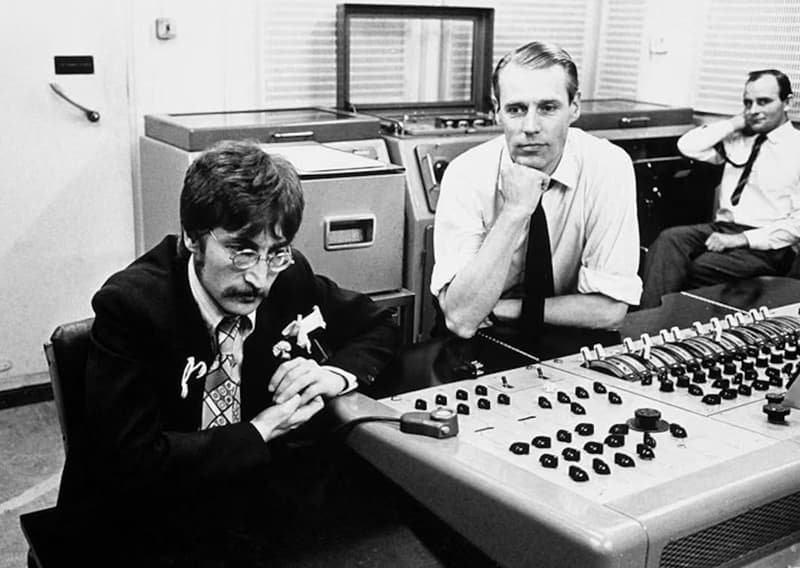
" In the 50s, stereo was reserved for classical recordings. You didn’t do any overdubbing or editing. When I first went into Abbey Road Studios in 1950, we didn’t use tape, we went directly to wax, because it was so much better quality.."
~ George Martin
Today’s New Moon newsletter is a bit of a long one, and takes a slightly different approach. I’m putting it together hot-spotting in the passenger seat, rolling across Italy en route to a friend who lives near Fivizzano. So instead of a few rhetorical questions of my own, I’m recycling some that were asked of me this week about my book.
Luka from wroteabook.org is doing a review of Vinyl Vitality. He sent me some follow-up questions to add color to his feature. I replied at length, so here you go.
Q: What was the first record that made you feel the difference you describe, the sense that the music was live in the room with you?
Everyone has heard the song Papa was a rolling stone by The Temptations. But until you experience it on vinyl on a good stereo, you are missing out. That tinny version on the radio doesn’t cut it. You can feel the ambience of the studio where the recording session was held Somehow the resonance of the amplifiers and instruments come through, and the emotions in the vocals are visceral.
I’ve always held this track up as a prime example of the essence of analog. When I hosted Analog Awareness workshops in Bali some years back I would play it twice for the group, first from my phone plugged into the sound system, and then on vinyl.
The reaction was always the same — with digital, ok, they hear it, understand the story, bob their heads to the beat, but that’s about it. With the record playing people would describe having chills run down their spine, tears coming to their eyes, and practically bursting with anger at the sadness and loss in the song. The verdict was that the analog version carried consciousness and emotion far deeper than digital.
Q: You owned a rave store in San Francisco in the 90s. What’s a story from those days that belongs in a book about why vinyl matters?
This question gets to the heart of why I often use the term “analog media” in my work. Music recorded on magnetic tape, (cassettes, reel-to-reel, and 8-track), all carry the electromagnetic resonance that touches our senses in a way that digital doesn’t. My shop was where I first noticed the difference and started wondering why.
Ameba on Haight Street was ground zero for the early San Francisco rave scene. The internet was brand new and cell phones were unheard of. People found the underground parties by picking up flyers at stores like ours, or calling telephone hotlines. On Fridays and Saturdays, ours would ring off the hook.
We were probably the first place on the West Coast to sell DJ mix tapes. These were analog recordings, made in home studios or from the soundboard at raves. Unless you were a DJ buying records, it was the only way for ordinary ravers to hear or own the new sounds of House, Techno, or Breakbeat that DJs like Garth, Jenö, or Doc Martin were playing.
These tapes were the soundtrack to our store, playing non-stop whenever our doors were open. We had a decent stereo in the shop, and played the music loud enough to dance, often letting the cassettes loop over and over on our tape deck.
Compact discs had been out for a few years, and by sometime around 1995 or ’96, the cost of having small numbers produced had dropped to where some of the more successful DJs could afford to release mixes on CD.
Right away I sensed something was different but I couldn’t put my finger on it. The tracks they chose were great, the mixing was flawless, but something was missing. What stood out to me was the fact that we never let one repeat and play more than once like we would do with the cassettes. As soon as the CD finished, it was always “Next!”, never just letting it loop like a tape.
At the time, it was just a puzzling observation, and a vague sense that somehow the digital compact discs were somehow lacking. When more pieces of the puzzle came together over the years, these early observations at the dawn of the digital era stood out as early clues to my theory.
By the late 90s to early 2000s, a majority of the rave DJs had been lured in by convenience and the hot-new-technology aspect of digital, and were switching from vinyl to CDs, and then later USB thumb drives or laptop controllers. For me it was like feeling the soul drain out of the scene like helium from a balloon.
Q: For someone buying their first turntable this weekend, which three records would you hand them, and why?
Wow, just three? That’s tough! Ok, here goes.
Let’s start with A Night at The Opera by Queen. There are any number of famous albums that are masterpieces in the art of the LP, (Sgt. Pepper’s by The Beatles, The Hissing of Summer Lawns by Joni Mitchell, Mezzanine by Massive Attack, the list goes on), but few match the ferocity of emotion and roller coaster whiplash of A Night at The Opera.
Albums like this are made to be experienced in their entirety, in two movements, side one and side two in order, a narrative, almost cinematic auditory experience. To shuffle the songs is to short change both the listener and the artist, any track on its own lacks background, contrast, and context. Taken on it’s own, the tentpole track Bohemian Rhapsody is brilliant, but to hear it without the supporting cast of Death On Two Legs, Sweet Lady, or Lazing On A Sunday Afternoon, is like seeing the star while missing the play.
A Night at The Opera is a tour-de-force of emotional textures. It’s not that it tells a story per se, but rather your own story emerges inside you as a reflection of all the places it takes you. The range between the peaks and valleys leaves you gasping for breath. When side two ends and you’re left with the quiet crackle of dust in the runout groove, it’s like “What the hell just hit me?” Timeless, fresh, and essential.
Next up is The Man Machine (Die Mensch Maschine) by Kraftwerk. When it comes to the map of modern electronic music, Kraftwerk is a major metropolis. Aside from providing a lovely ambiance from start to finish, this LP accurately illustrates the purity and potential of analog sound.
Back in the long-ago mists of the 60s and 70s, electronic music was by no means digital. Synthesizers were analog, and state-of-the-art sound came from vacuum tube driven amplifiers. Kraftwerk were major innovators — electronic music was a sparsely populated field in the heyday of rock-and-roll.
As digital recordings approach the upper range of our hearing, the high-pitched sounds are often described as ‘tinny’ or like a buzz. This is because digital sound is granular and degrades more as the pitch goes up. In other words, the higher the note, the less accurate the sound. Treble suffers most.
The track Neon Lights has an analog synth that brings a pure high pitched note up and beyond the vanishing point of your hearing. It’s a rare pleasure to feel such a clean sound elevate beyond the ability of your ears to hear it. It’s like the top of your head opens up and the tingle in your spine goes through the roof. Pure pleasure on a platter.
The last one of three is tricky. I wanted to include something that works as a gateway drug into the pleasure of Jazz, so my mind first went to A Tribute to Jack Johnson, Miles Davis’s blistering two-track LP with epic guitar work of John McLaughlin. But no, I had to settle on Getz / Gilberto by Stan Getz & Joao Gilberto.
Every turntable owner needs a record that will provide ample pleasure in any number of scenarios. Pouring a drink while cooking your date dinner? Getz/Gilberto. Putting your feet up after a long day at work? Getz/Gilberto. Setting the mood for the day over breakfast? Getz/Gilberto. It’s simply impossible to get tired of this record, it’s no wonder it’s on so many all-time-great or desert island lists.
From the moment you drop the needle on the first track, you can tell there was magic in the air at the studio. The Girl from Ipanema made Bossa Nova a household word, and rightfully so, yet it’s the rest of the album that carries you away into the mood of far away Brazil in the 60s. Velvet smooth vocals, sublime musicianship, and stellar production came together to create one of most famous records of all time.
Creed Taylor, the producer, recorded the sessions running the tape at 30 inches per second instead of 15, twice the usual speed. This was costly and unusual, and resulted in an even more warm and accurate high-fidelity recording than typical records at the time. To play a well-cared-for copy today is to experience the timelessness of analog media at its best, more than 60 years later.
And with that, I hand these three LPs to our new turntable owner with the hope that each one is an entry point into new worlds of music, to be explored in all their analog glory, one LP at a time.
Ok, kudos to you if you made it this far, I know it’s a lot for a newsletter. Then again, being on a writers mailing list is probably not a good idea if you’re into that whole brevity thing.
Abide, my friends… see you on the full moon.
M+
Mark Metz
Analog Press
Lunar Note #4
Lunar Notes Mailing List

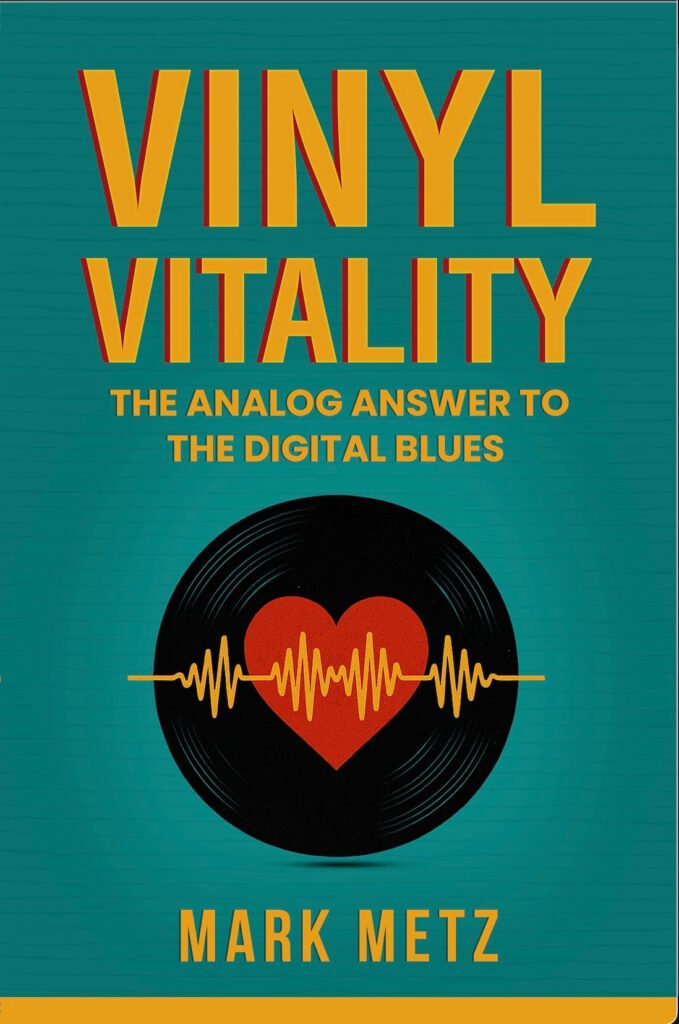
$2.99 e-promo ends soon
Coming soon to a bookstore near you!
Soon to be available at Barnes & Noble and independent retailers.
About those guys at the top. John Lennon needs no introduction, but it’s the man to his right deserves a great deal of credit for the success of The Beatles.
George Martin reigns supreme among legendary producers of the recording world. I used his quote to head up the chapter “Deeper with 12 Inches” where I unpack what’s different about 12″ inch dance singles and why professional DJs prefer them.
In short, more room for the grooves translates into better bass in the beats. Vinyl Vitality comes at the analog equation from two directions. Well, three actually. My goal is to help collectors understand the DJ world better, and vice versa. It’s also for folks just getting their feet wet with vinyl, or thinking about why they might want to.
Where do you fit? Read the book and find out, and meanwhile, keep those records spinning!
M+